

Forged By Fire: Cast Iron Skillets and the Stories They Carry.
(Courtesy: Wikipedia)
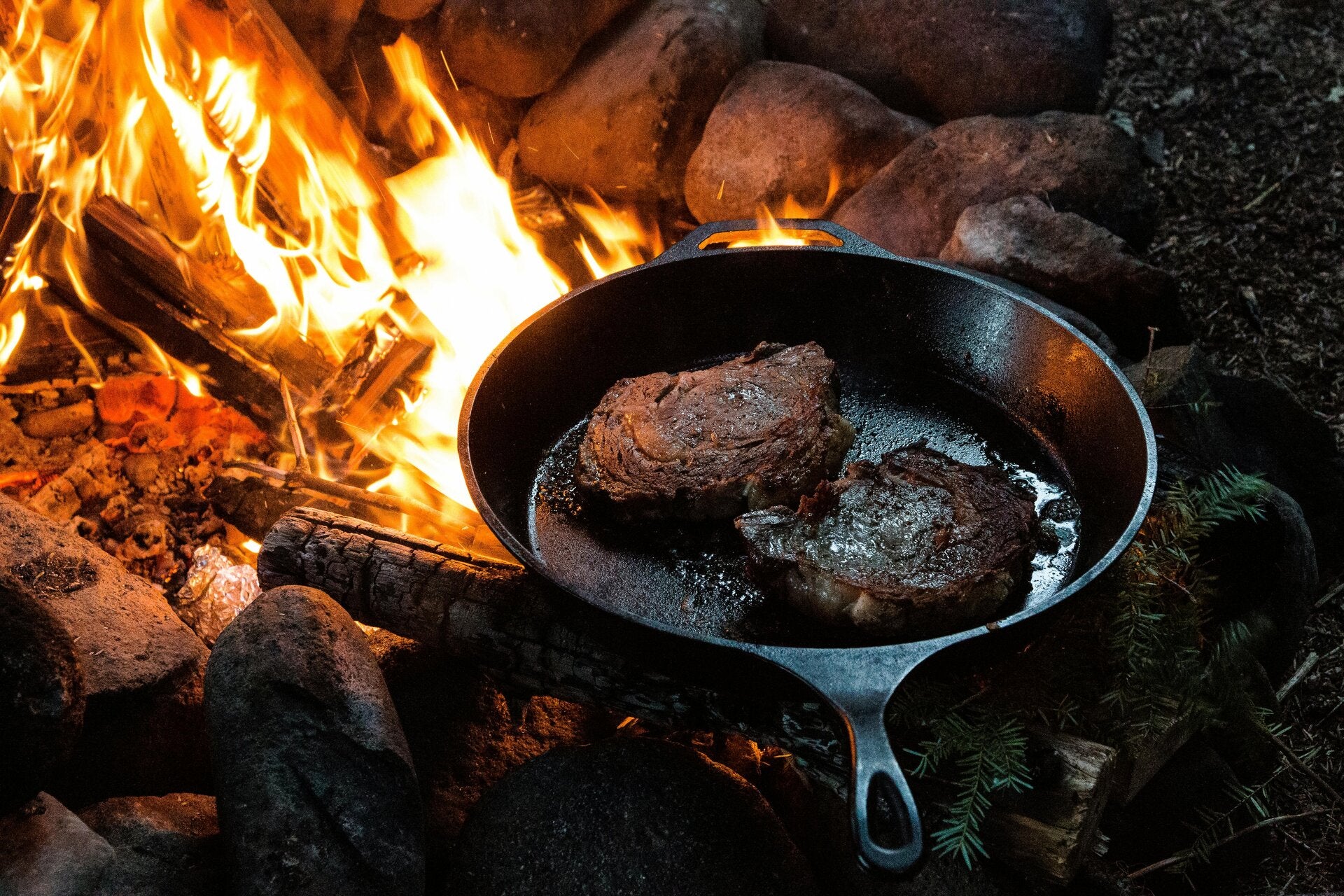
Cast iron feels most at home over an open flame—steady, durable, and unchanged by centuries of fire-side cooking.
In Southern Missouri, a cast iron skillet is rarely just a pan. It’s a witness. Open a cupboard in an Ozark farmhouse and you might find a skillet so smooth it shines, its bottom worn thin from decades of sliding across a cooking stove's eyes. Ask where it came from, and the answer will mostly likely be, "It’s always been here.”
How Early Cast Iron Was Made—and Why It Mattered.
In the 1800s, cast iron skillets were made in small American foundries using sand molds. Each pan was poured by hand, cooled, then ground smooth by workers who knew their craft well, in fact, some called these workers experts. Why? Because the very pieces of steel they were forming into skillets was a labor of love. Skillets were revered in the kitchens of early days because .oat cooking rooms didn't have electricity or if they did, it was misered because of cost. Cast iron skillets were perfect to hold heat then, and now.

(Courtesy: Reddit)
Long before modern kitchens, cast iron traveled wherever people did—trusted on chuck wagons and campfires alike, feeding generations with steady heat and timeless reliability.
Cooking Over Fire, Not Convenience.
Before electricity reached much of rural Missouri, cooking meant managing heat by instinct. Wood stoves flared and cooled unpredictably. Cast iron made that manageable.
Cast iron held heat when fires burned low at night and stayed hot long enough to fry salt pork for breakfast without rebuilding the flame. Again, always on standby, stainless steel skillets were ready to capture the flame and deliver a delicious meal of fried eggs, cornbread and sizzling ham.

(Courtesy: Old Vintage Photos)
A steady wood stove, a trusted cast iron skillet, and a turkey cooking the way generations before us would recognize.
How Early Cast Iron Skillets Were Made.
Cast iron cookware dates back centuries, but in America its widespread use began in the 1700s and 1800s, as iron foundries spread across the country. Early skillets were made using sand casting, a labor-intensive but effective process. A wooden or metal pattern of the skillet was pressed into damp sand to form a mold. Then molten iron was carefully poured into the cavity. Once cooled, the pan was removed, trimmed, and hand-finished. Unlike modern cast iron, early skillets were often thinner, smoother and lighter, thanks to hand grinding and polishing. The final process was marked with foundry names or symbols rather than brand logos.
By the late 1800s and early 1900s, American foundries such as Griswold, Wagner, Lodge, and Birmingham Stove & Range were producing cookware that would become heirlooms—many of which still turn up in Southern Missouri kitchens today.

(Courtesy: Wikipedia)
Here’s an old cast iron skillet stamp that has a little bit of history. The company started manufacturing cast iron from 1903 to 1926 in Wapakoneta, Ohio. Most people refer to it as the Indian Head skillet. Price range can vary from $50 to $695.

(Courtesy: Wikipedia)
In many households, learning to cook meant learning the skillet. A common Ozark saying was: “If you can’t lift it, you ain’t ready.” Young cooks learned to respect the weight, the heat, and the responsibility.
Why Cast Iron Skillets Are So Special.
Cast iron skillets occupy a rare place in material culture, straddling the line between tool, heirloom, and quiet historical witness. Long before they were trendy or branded as artisanal, a well-made skillet was once a marker of status, its thin walls and smooth cooking surface signaling skilled craftsmanship in an era when iron casting was unpredictable and labor-intensive. In early America, a single cast iron pan often served as an entire kitchen, used for frying, baking, griddling, and survival itself, shaping regional cuisines in the process—cornbread’s crisp crust, Southern fried chicken’s steady fry, and even early American pizza owe their defining textures to iron’s ability to retain and evenly radiate heat. Over time, each skillet developed a seasoning that was less residue than chemistry: a polymerized carbon layer formed through repeated heating and cooling, creating a naturally slick surface that functioned long before modern nonstick coatings existed. That seasoning, combined with decades of use, gave every pan a personality, subtly altered by the hands that cleaned it, the stoves that heated it, and the foods it cooked, ensuring no two long-used skillets ever performed quite the same. Myths grew alongside the metal—like the taboo against soap, born in the lye-heavy cleaning agents of the past—and rituals replaced instructions, turning care into folklore passed from generation to generation. Even war left its mark; during World War II, iron production was diverted for weapons, and the heavier, rougher pans produced before and after rationing can still be dated by collectors through touch alone. Doctors once prescribed cast iron cookware to combat iron deficiency, a practice that modern science confirms can measurably enrich food, especially acidic dishes. Perhaps most striking in a disposable age is cast iron’s resistance to obsolescence: the technology has remained largely unchanged for centuries, requiring no coatings, replacements, or upgrades, and making it one of the most sustainable tools ever brought into a kitchen.

(Courtesy: America's Test Kitchen)
Wood stoves heat evenly and hold steady warmth—exactly why cast iron skillets have paired with them for centuries.
A Pan That Outlived Its Owners.
Because cast iron was costly, it was never thrown away. Cracked handles were tolerated. Warped bottoms were worked around. A skillet might pass through three or four generations. A well-seasoned skillet became smoother with age, absorbing years of meals and care. Many Southern Missouri families still cook with skillets that once belonged to a great-grandmother who cooked on a wood stove, or a fur-trapping grandfather who carried it into the woods or simply, a devoted mother who baked cornbread every Sunday for the congregation.

(Courtesy: Food Network)
Cooking in cast iron means even heat, better moisture retention, and beef that simmers into melt-in-your-mouth tenderness.