

Then Caught Off Guard, Now Prepared: From the Great Blue Norther of 1911 to Winter Storm Fern.

(Courtesy: The Weather Channel)
Winter Storm Fern has swept across more than 30 states in January 2026 with heavy snow, sleet and ice, affecting over 220 million people and prompting widespread power outages, travel chaos and emergency declarations as it barrels from the South to the Northeast.
As Winter Storm Fern sweeps across the Nation and into the corners of Southern Missouri, the landscape has transformed into a quiet, glistening expanse of white. The cold bites at the cheeks of those daring enough to venture outside, and the wind carries a sharp reminder that nature’s power is never to be underestimated. Roads that just yesterday hummed with traffic now lie deserted under thick, crusted layers of snow. Tree branches bow under the weight. For many, the simple act of stepping outside becomes a strategic calculation: where to walk, which paths are safe, and how to make it back inside before frost bites deeper.
Though Fern has brought considerable disruption, Southern Missourians have seen storms before. History reminds us that “worst” is a relative term. One of the state’s most memorable weather events occurred over a century ago, in 1911, and the contrast between then and now highlights not just the evolution of meteorology and infrastructure but the remarkable resilience of those who lived through an era when survival demanded ingenuity and grit.

(Courtesy: Wikipedia)
A stranded traveler wades through thigh-deep snow following the Great Blue Norther of 1911, which buried roads and brought travel to a standstill after an unseasonably warm start to the day.
Introducing the Great Blue Norther of 1911.
Missouri is a state fluent in all four seasons, where spring’s green promise, summer’s thick heat, autumn’s fire-colored hills, and winter’s quiet cold usually arrive with a gentleman’s pause between them—but on rare occasions, nature abandons courtesy altogether. In those extraordinary moments, the sky seems to spin through the calendar in a single day, trading the roar of tornado sirens for the hushed whistle of wind-driven snow within hours. Warm, unstable air can surge north from the Gulf, churning the atmosphere into violent rotation, only to be abruptly displaced by an arctic blast that locks the land in ice and silence by nightfall. Such a drastic contrast—fury to frost, thunder to snowfall in a mere 24 hours—is almost unheard of, even in a state known for weather drama.
On November 11, 1911, an almost unimaginable weather drama unfolded across the heart of the United States as a powerful arctic cold front, later dubbed the Great Blue Norther, slammed into an unusually warm, late‑autumn atmosphere. Across the central and northern Plains and Midwest, including Southern Missouri, areas that basked in 70s and even 80s°F by mid‑afternoon were plunged into bitter cold by nightfall, with thermometers sometimes dropping 30–70°F in just a few hours. The sheer swiftness and scale of the event left communities astonished — a remarkable chapter in American weather history that rippled from the Great Plains into the eastern states, catching farmers, hunters, and city‑dwellers alike off guard with both fierce storms and a sudden descent into winter’s grip.
The Great Blue Norther of 1911 was not just a blizzard with loads of snow, it was also responsible for hailstorms, dust storms and more than 15 tornadoes on November 11. States hardest hit by tornadic activity included Illinois and Indiana. The highest tornado of the outbreak was later rated an EF4 and this tornado struck in Wisconsin killing 9 people in its path.
The most astonishing fact about the "Norther" was its path of destruction and fascinating array of weather types. Locals reported rain turning to hail, then sleet and snow all within a couple of hours as the cold wave snowballed southward, showing not just a drop in temperature but a complete transformation of the weather itself. For most of the day, warm weather severe activities were common, but but then later, a blizzard would arrive. Many people were caught by surprise with the unusual weather as areas that had been hard hit by tornadoes earlier, were hit by a blizzard that would go on to halt help efforts.
For some, the violence of the tornado was only the beginning of the ordeal. Homes were torn apart or flattened entirely, leaving families suddenly exposed to the open air just as the Great Blue Norther’s brutal cold rushed in behind the storm. With no warning and little shelter, survivors of the wind found themselves battling blizzard conditions—driving snow, plunging temperatures, and relentless wind chill—and it is believed that some perished not from the tornado itself, but from exposure in the deadly cold that followed.
Following the Great Blue Norther, the winter of 1911–1912 continued to be punishing. Winter snowfall totals across Missouri were historically high, with some areas in the Ozarks reporting more than 50 inches of snow over the season, and drifts reaching 6 feet in exposed valleys. Towns and rural communities alike found themselves cut off repeatedly, as early ill-equipped automobiles struggled through waist-deep snow and horse-drawn wagons became trapped in drifts. Railroads ground to a halt, and telegraph lines—the era’s lifelines—sagged under ice or snapped entirely.

(Courtesy: Wikipedia)
Courtesy of the Great Blue Norther of 1911, Springfield, Missouri reached a record high of about 80°F in the early afternoon only to plunge dramatically after the cold front passed — dropping nearly 40°F in 15 minutes and eventually settling at a record low of 13°F by midnight. Both those records on the same day still stand. (Source: National Weather Service)

(Courtesy: Wikipedia)
The Great Blue Norther of 1911 unleashed more than cold, with powerful winds whipping dust into the air and terrifying animals and people alike as temperatures plunged within hours.

(Courtesy: Wikipedia)
What began as a warm, almost summerlike day ended in chaos, as women scurried to pull laundry from the line when the Great Blue Norther of 1911 swept in, replacing heat with snow and biting wind chills by nightfall.

(Courtesy: National Archives)
A horse-drawn sled pressed into service earlier than expected as the Great Blue Norther of 1911 brought sudden, brutal cold and snow, forcing residents to adapt overnight. The Great Blue Norther of 1911 abruptly froze roads and made wheeled travel impossible.
Life during the "Norther" was starkly different from today.
In 1911, there was no warning scroll across a screen, no buzzing phone in a coat pocket, no expert calmly explaining what was about to unfold. People were caught utterly off guard by the extraordinary chain of events, left to read the sky the way their parents and grandparents always had. They watched clouds pile high and dark with no name for what they meant, felt the wind shift suddenly against their faces, and sensed the temperature falling faster than seemed possible. Farmers noticed livestock turning restless, cattle pressing toward barns, horses burying their muzzles into hay as if instinct alone knew what was coming. Historical accounts describe this weather phenomon.
Between five and six in the evening, the sky took on a threatening, stormy cast, with little whips of rain… About 6:20, the wind suddenly veered around to the west, and the storm broke with a fury. A deluge of rain swept on before the gale, and the quicksilver made a hurried retreat down the tube.” – Another local report showing how rapidly weather went from calm to chaotic in a matter of minutes.
By nine o’clock, it was almost freezing, and by early Sunday morning the temperature was ‘down pretty close to zero.’” – A reflection on how quickly the cold surged, leaving people stunned by the drop.
(Source: Ozarks History)

(Courtesy: Wikipedia)
Sunshine one moment, snow the next—ladies and gentlemen alike hurried to swap parasols for warmer woolen coats.
By the time the true force of the Blue Norther revealed itself, there was no time to prepare—only time to endure. The storm arrived not as a forecast, but as a shock, teaching a hard lesson about how small and vulnerable life could be when nature moved faster than human understanding. Electricity was still far from common in rural Missouri. Many families had no electric heat or lights, relying instead on fireplaces and wood stoves to stay warm. With snow drifts piling feet deep, collecting firewood became a daily challenge. Residents had to dig through the frozen blankets of snow to reach logs and kindling, a labor-intensive and exhausting task that often consumed hours of each day. Families huddled by the fire, rationing limited supplies of food and fuel while children adapted their play to the harsh environment.
Daily life changed dramatically. Mornings once filled with the bustle of farm chores became grueling exercises in endurance. People shoveled paths through drifts simply to feed animals or fetch water, often taking hours to complete what would normally be a 15-minute task.
Medical emergencies were particularly perilous. Without modern ambulances or snowplows, doctors riding upon horseback were often unreachable for days. Records of deaths resulting from the Great Blue Norther of 1911 exist in fragments because many remote communities had no formal reporting mechanisms. Fatalities were likely undercounted, with deaths from exposure, accidents, and cold-related illness occurring quietly in isolated homesteads. The storm’s human toll, though largely undocumented, was undoubtedly significant.

(Courtesy: National Archives)
A dilapidated building likely damaged by tornadoes during the Great Blue Norther of 1911, a storm whose deadly combination of violent winds and a sudden blizzard left some residents homeless and exposed to the cold.
The persistence of the snow and cold was perhaps the most punishing element.
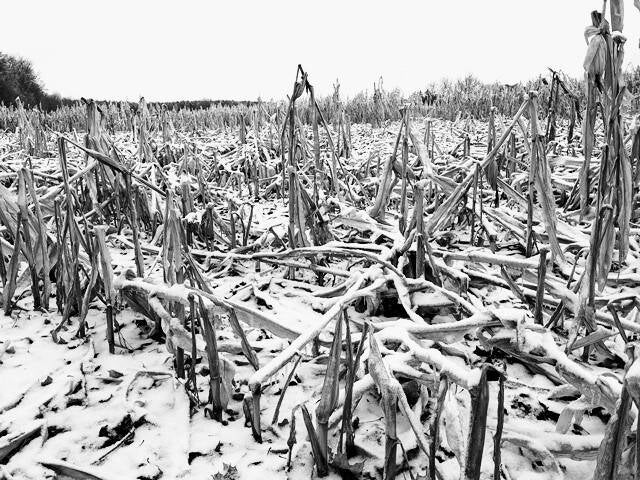
The Great Blue Norther of November 1911 struck at the worst possible moment for farmers. Fields that had promised a late harvest were suddenly buried under several feet of snow, and bitter winds made even simple chores nearly impossible. Crops left in the open froze before they could be gathered, while livestock struggled—or in many cases perished—in the unrelenting cold. What began as a normal late autumn quickly turned into a desperate fight against a winter that came far too early, leaving farms and families reeling from the unexpected devastation. Unlike modern systems that move through within days, the "Norther's" snowpack of 1911–12 lingered, kept intact by freezing temperatures for weeks at a time. Rivers and creeks remained frozen solid, halting travel and trade. Spring felt delayed, and for weeks, communities were trapped in an icy, silent world, forced to endure both the physical and psychological weight of isolation.
(Courtesy: Progressive Farmer
The Great Blue Norther of 1911 swept through Southern Missouri in November, obliterating crops just as farmers were harvesting, leaving fields—and livelihoods—in ruin.